
Why Does My Dog Pull on Walks?
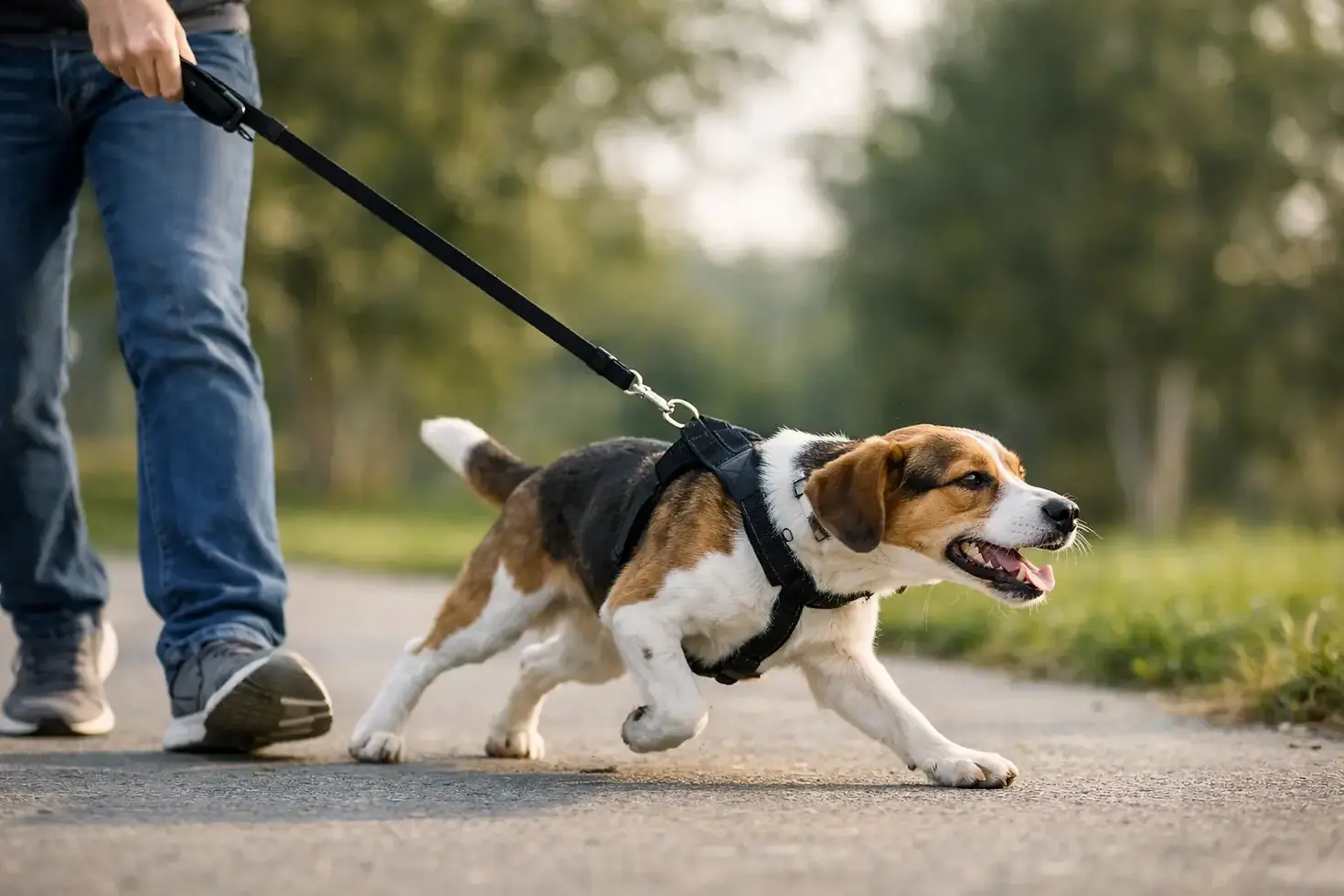
You clip the lead on, step out of the front door, and within seconds your arm is stretched, your dog is forging ahead, and the walk already feels like hard work. If you have been asking, why does my dog pull, the answer is usually simpler than people think. Pulling is not stubbornness, spite or your dog trying to be in charge. In most cases, it is a learned habit driven by excitement, speed, distraction and a lack of clear lead-walking skills.
That matters, because if you understand why it is happening, you can fix the right problem instead of just battling through every walk.
Why does my dog pull in the first place?
Dogs pull because, very often, pulling works. If your dog leans into the lead and still gets to the lamp post, the grass verge, the park gate or the scent trail, the behaviour is being rewarded. Not because you meant to reward it, but because the environment did.
For many dogs, the outside world is highly stimulating. There are smells, movement, people, dogs, wildlife and places they want to get to quickly. Humans walk at a steady pace. Dogs tend to move with much more purpose. When those two speeds clash, the lead gets tight.
There is also an emotional piece to it. Some dogs pull because they are overexcited. Some pull because they are anxious and trying to move away from pressure or towards safety. Some pull because they have never been properly taught how to walk calmly on a loose lead around real distractions. The reason matters, because a dog pulling to reach a pigeon is not the same as a dog pulling because another dog is making them uneasy.
Pulling is often a training gap, not a personality flaw
A lot of owners assume their dog knows what they want and is choosing to ignore them. Usually, that is not the case. Dogs do what has been clearly taught, consistently reinforced and fairly followed through.
Loose-lead walking is not natural in the way many people expect. Your dog is being asked to match your pace, stay connected to you, ignore interesting things and respond to guidance in busy environments. That is a skill set. If that skill has not been built step by step, your dog will fall back on instinct and habit.
This is especially common with adolescent dogs. A puppy that looked lovely on lead at 12 weeks can become a completely different prospect a few months later. Confidence increases, distractions matter more, and the world becomes far more exciting than the person holding the lead.
Why does my dog pull more in some places than others?
Context changes everything. A dog that walks nicely on a quiet road may pull badly the moment you reach the fields, the high street or a popular park. That does not mean your training has failed. It usually means the environment is harder than your dog can currently cope with calmly.
Distraction level, arousal and expectation all affect lead behaviour. If your dog has a strong history of arriving at the park and then being let off to run, they may start pulling as soon as they realise where they are going. If they regularly drag you to other dogs and then get to greet them, they learn that tension on the lead is part of the route to what they want.
This is one reason indoor practice rarely transfers by itself. Real-life results come from teaching the behaviour where it actually needs to happen, then building reliability gradually.
Common reasons dogs pull on the lead
Excitement and anticipation
This is one of the biggest causes. The walk starts, your dog’s energy shoots up, and their brain is already three steps ahead. In that state, they are not making calm decisions. They are simply moving towards the next interesting thing.
Lack of impulse control
Some dogs have never learned that access to the environment comes through calm behaviour. If they want to move, they move. If they want to sniff, greet or rush ahead, they try it. Without clear boundaries, that pattern becomes stronger.
Inconsistent handling
If pulling sometimes works and sometimes does not, most dogs will keep trying. From their point of view, it is worth repeating because there is still a chance it pays off. Consistency is what changes that picture.
Equipment without training
A harness, headcollar or different lead may give you more physical control, and in some cases that is helpful. But equipment alone does not teach a dog how to walk well. It manages the symptom. The long-term change comes from training.
Stress or uncertainty
Not every pulling dog is confident. Some speed up because they are uncomfortable. Busy roads, bikes, dogs, children or unfamiliar places can all create tension. A worried dog may pull forwards, backwards or sideways depending on what they are feeling.
What pulling tells you about your dog’s state of mind
A tight lead is not just a mechanical issue. It often tells you your dog is too disconnected, too aroused or too concerned to walk with you properly.
That is why simply correcting the lead tension without addressing the dog’s emotional state can fall flat. If your dog is frantic, overexcited or scanning for threats, they are not in the right frame of mind to maintain calm lead walking for long. Good training improves both behaviour and mindset. The aim is not a dog that is physically restrained into position. The aim is a dog that is mentally with you.
How to stop a dog pulling without turning walks into a battle
Start by being honest about your current walks. If every outing is a rush from the front door to the park, with your dog towing you most of the way, that pattern is rehearsing the very behaviour you want to change.
Slow everything down. Your dog needs to learn that pulling does not move the walk forward, but calm engagement does. That sounds straightforward, but it only works if you are clear and consistent. If you stop when the lead is tight but then give in after a few seconds because you are in a hurry, your dog learns to persist.
It also helps to lower the difficulty. Trying to teach loose-lead walking in the most distracting place you can think of is usually where owners come unstuck. Begin where your dog can actually succeed, then build from there.
Reward the right picture
Loose-lead walking improves faster when your dog understands what does work. That means marking and rewarding the moments when they are near you, checking in, matching your pace or choosing not to surge ahead.
For some dogs, food works well. For others, access to sniffing, movement or space is just as valuable. The point is not to bribe the dog down the pavement. It is to show them that calm, responsive behaviour gets them what they want.
Set fair boundaries
This is where many owners either go too soft or too heavy-handed. If the lead goes tight, your dog should not continue powering forwards as though nothing happened. Equally, yanking, nagging or constantly repeating cues creates frustration and noise.
Clear handling matters. Your dog needs to understand the difference between the right answer and the wrong one. Calm guidance, timely reinforcement and consistent follow-through are what build that clarity.
Train the walk, not just the dog
Your own habits play a part. If you only pay attention once your dog is already pulling, you are always reacting late. Better results come when you notice the build-up. The ears prick, the pace changes, the body leans forward. That is the moment to re-engage your dog before the lead goes tight.
This is also why owner coaching matters. The dog is only half of the picture. Better timing, clearer communication and more consistent responses from the handler often change lead walking far quicker than people expect.
Why quick fixes usually do not last
It is tempting to look for a tool or technique that stops pulling straight away. Sometimes you can reduce the symptom quickly, but unless the dog learns self-control, focus and lead pressure awareness, the behaviour tends to return in one form or another.
Durable loose-lead walking is built through repetition in real environments. Quiet roads, busier pavements, parks, school-run traffic, other dogs, changing weather, higher excitement levels. Dogs do not generalise neatly, so each setting teaches them something.
For owners around Crawley and the wider West Sussex area, this is often the missing piece. Dogs can look capable in a lesson or the garden, then fall apart on the route they walk every day. That does not mean they cannot do it. It means the training needs to reach the places that matter.
When pulling is more than a lead-walking issue
Sometimes pulling is tied to a bigger behaviour problem. If your dog is lunging towards dogs, trying to chase moving objects, panicking in certain locations or becoming impossible to settle before walks, it is worth looking beyond lead manners alone.
In those cases, the lead is simply where the problem shows up. The real issue may be overarousal, frustration, fear, poor neutrality or a lack of structure in day-to-day life. If that is the case, teaching your dog to walk nicely will still help, but it needs to sit inside a wider training plan.
A dog that can walk calmly, stay connected and respond promptly in everyday environments has more freedom, more safety and a much easier life with their owner. That is the bigger goal.
If your dog pulls, do not write it off as just one of those things. It is a behaviour with causes, patterns and solutions. Once you stop treating the walk like a tug-of-war and start treating it like a skill to teach, progress becomes much more realistic.


Comments