

Owner Coaching for Dog Training That Works
- Aug 3
- 6 min read
A dog can sit beautifully for a trainer, then pull you down the pavement, ignore recall in the park or bark at every passing dog the moment the session ends. That is not because your dog is trying to make life difficult. It is because lasting progress depends on owner coaching for dog training, not simply on what the dog can do for somebody else.
Real-life training means you know what to do when the lead goes tight, a squirrel appears, visitors arrive or another dog comes round the corner. Your dog needs clear, consistent information from the person they live with every day. When you develop those handling skills, training stops being something that happens once a week and becomes part of a calmer, more reliable routine.
Why the owner is central to the result
Dogs learn from consequences, repetition and the environment around them. They also learn what works with each individual person. If one family member allows pulling, another uses a different recall word and someone else gives attention when the dog is jumping up, the dog receives mixed messages.
This is where many well-meaning owners get stuck. They have watched videos, bought the treats and practised a few commands in the kitchen, yet behaviour falls apart outdoors. The issue is rarely a lack of affection or effort. More often, there is no clear plan for timing, boundaries, distractions and follow-through.
Good coaching gives you that plan. It helps you understand not only what to ask your dog, but when to ask, how to reward, when to step in and how to make the right choice easier for them. It replaces guesswork with practical decisions you can make on an ordinary walk.
A reliable dog is not one who performs when conditions are perfect. It is one who can listen when life is busy, exciting or frustrating. That takes training for both ends of the lead.
Owner coaching for dog training builds clear communication
Clear communication does not mean endlessly repeating commands. In fact, repeating “come” five times teaches many dogs that the first four calls are optional. Coaching helps you use cues with purpose, give your dog a fair chance to respond and follow through calmly when they do not.
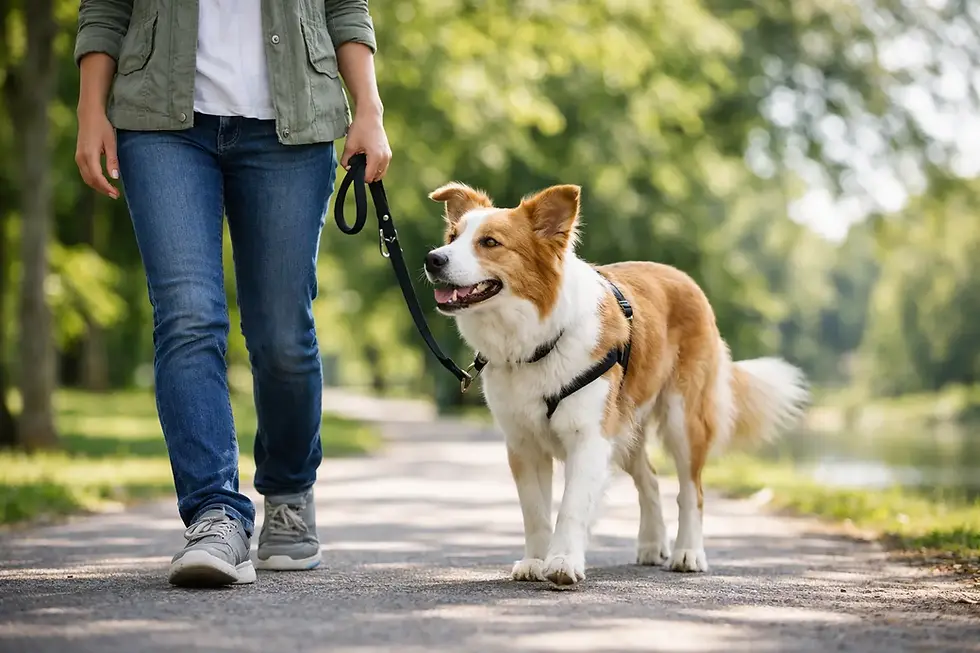
The same applies to loose-lead walking. Pulling often continues because it works: the dog reaches the smell, person or patch of grass they wanted. A stronger grip on the lead may prevent you being dragged, but it does not necessarily teach the dog a better way to walk. You need to recognise the moment your dog starts to load forward, create enough space to regain focus and reward the position you want instead.
Timing matters. Rewarding a dog after they have already surged ahead or barked at another dog can accidentally reinforce the wrong moment. Correcting too late is equally unhelpful. An experienced coach can show you what to watch for: the stiffening body, fixed stare, raised pace or sudden loss of attention that appears before the behaviour you are trying to change.
That knowledge is particularly valuable with adolescent dogs. They may understand their training in quiet places but find the outside world far more rewarding than you. This does not mean training has failed. It means the difficulty has increased, and your handling needs to become more deliberate.
Rewards are useful, but they are not the whole plan
Food is a powerful training tool, especially when introducing new skills or building a positive association. It can help a worried puppy feel safer, encourage a dog to check in and make repetition worthwhile. But treats alone do not create dependable behaviour around every distraction.
A dog needs to understand that listening is part of everyday life, whether or not you have a pouch full of chicken. Balanced training combines meaningful rewards with fair, consistent boundaries. Your dog should be motivated to make good choices, while also understanding that pulling, barging, ignoring a known cue or repeatedly demanding attention will not get them what they want.
This is not about being harsh or dominating your dog. It is about being clear. Dogs generally cope better when the rules are predictable. They do not need a different answer every day depending on how rushed, tired or embarrassed you feel.
The real-world skills owners need
Training sessions can look very tidy in a quiet hall or enclosed field. Everyday life is different. There are school-run pavements, cyclists, muddy paths, doorbells, café tables, children playing football and off-lead dogs with varying manners. Owner coaching prepares you to handle those moments without panic.
For recall, that may mean learning when not to call your dog. If they are already locked on to another dog and you know they will ignore you, repeating the cue risks weakening it. A better choice may be to create distance, use your lead or long line, gain attention through a well-practised interruption and then reward a successful return. Prevention is not failure. It is sensible management while the skill is still being built.
For reactivity, coaching may involve changing the route, increasing distance from triggers and teaching your dog an alternative behaviour before expecting them to cope close by. Some dogs need confidence-building. Others need firmer structure because they have learned that lunging and barking controls the space around them. The right approach depends on the dog in front of you, their history and the behaviour itself.
At home, the focus may be on calmer greetings, settling on a bed, waiting at doors or reducing frantic behaviour when the lead comes out. These small routines matter because they shape your dog's general state of mind. A dog who practises patience before meals, walks and greetings is often better prepared to cope with frustration elsewhere.
Consistency without turning life into a drill
Owners sometimes worry that structure will make life joyless for their dog. The opposite is usually true. A dog who can walk without hauling, come back when called and settle when needed has more freedom to join family life safely.
Consistency does not mean running formal drills for hours. It means making everyday interactions count. Ask for a moment of calm before clipping on the lead. Reward your dog for choosing to walk beside you. Practise a quick recall away from low-level distractions and release them back to sniff. Build short, successful repetitions into the day rather than waiting for one long training session at the weekend.
It also means the household needs to agree on the basics. Decide which words you will use, whether the dog is allowed on the sofa, what happens when they jump up and how you will respond to pulling. Not every family needs identical rules, but the rules you choose need to be consistent enough for the dog to understand.
There will be off days. Your dog may be overtired, unwell, overexcited or simply facing a bigger challenge than usual. You may be distracted or short on time. The aim is not perfection. It is recognising when the situation is too difficult, managing it well and returning to the level where your dog can succeed.
What effective coaching should feel like
A good coaching session should leave you clearer, not more dependent. You should understand why your dog behaved as they did and have specific exercises to practise between sessions. You should know what success looks like, what to do if things go wrong and when to progress.
It should also be honest. No responsible trainer can promise that every dog will become sociable with every dog, or that a long-standing behaviour will disappear overnight. Some dogs will always need more distance, management or careful choices around particular triggers. Progress may be gradual, especially where fear, reactivity or a history of rehearsing unwanted behaviour is involved.
But gradual does not mean vague. Real progress looks like fewer explosions, quicker recovery, a lead that stays loose for longer, a dog who checks in voluntarily and an owner who feels able to make sensible decisions rather than dreading the next walk.
For owners in Crawley, Horsham, Horley and the surrounding areas, practising in the environments you genuinely use is a major advantage. A dog may cope well on a quiet training field but struggle near a busy road, local park or familiar walking route. Training needs to transfer to the places where it matters.
Confidence travels down the lead
Dogs notice hesitation. If you tense up whenever another dog appears, rush through your recall cue or negotiate with your dog at the end of the lead, they receive that uncertainty too. Owner coaching is not about blaming you for your dog's behaviour. It is about giving you the skills to respond with calm, fair confidence.
The best handling is often quiet. It is a well-timed reward, a clear direction, a sensible change of distance and the willingness to follow through. Over time, those choices become natural. Your dog learns that you are consistent, worth listening to and capable of guiding them through the world.
Start with the behaviour that affects daily life most, practise it where your dog can succeed, and build from there. A calmer walk or one reliable recall is not a small win - it is the foundation for more freedom together.


Comments