
Mantrailing for Focused, Confident Dogs
- 3 days ago
- 6 min read
A dog that pulls towards every smell, struggles to settle after a walk or loses focus around other dogs does not always need more exercise. Often, they need a clearer job. Mantrailing gives dogs the chance to use their strongest natural skill - scenting - in a structured, purposeful way.
Rather than asking your dog to ignore the world, mantrailing teaches them to follow one specific person’s scent trail. It is engaging, confidence-building and genuinely tiring in a way that repeatedly throwing a ball rarely is. Most importantly, it gives owners a better understanding of how their dog works, communicates and copes with distraction.
What is dog mantrailing?
mantrailing is a scent activity where a dog follows the unique scent of a missing person, known as the trail layer. The dog begins with a scent article, such as a glove or cloth handled by that person, then works on a long line to locate them.
The trail may run through woodland, along a pavement, across grass, around parked cars or through a busier public area. The dog is not following footsteps alone. They are working through scent left on surfaces, scent carried by air movement and the changes in odour caused by the environment.
At the end of the trail, the dog finds their person and receives a reward. For many dogs, that reward is food, a toy or enthusiastic praise from the trail layer. The search itself becomes rewarding too, because the dog learns that putting their nose down and staying committed leads to a successful outcome.
This is not search and rescue training, although the principles are rooted in the work of operational search dogs. Recreational mantrailing is designed to be safe, accessible and enjoyable for pet dogs and their owners.
Why mantrailing is more than a fun scent game
A good mantrailing session asks your dog to make decisions, work independently and stay on task. That mental effort can be extremely valuable for dogs who have plenty of physical energy but little constructive outlet for it.
For an adolescent dog that is overexcited on walks, mantrailing can teach them that calm concentration is worthwhile. For a worried or environmentally sensitive dog, succeeding on straightforward trails can build confidence without forcing them into overwhelming interactions. For a dog that loves to work, it provides a challenge that is far more meaningful than being asked to sit repeatedly in the garden.
There is also a benefit for owners. You learn to read the difference between your dog moving with genuine purpose and your dog simply investigating an interesting smell. You practise handling a long line, giving your dog room to work and avoiding the temptation to constantly direct them. That is not always easy, especially for owners used to managing every step, but it builds trust.
Mantrailing will not replace practical obedience. A dog still needs reliable recall, sensible lead manners and appropriate boundaries in everyday life. However, scent work can sit alongside those skills beautifully. A dog with an outlet for their brain is often more able to settle, listen and cope with normal life.
Which dogs benefit from dog mantrailing?
Most healthy dogs can enjoy mantrailing. You do not need a particular breed, a perfect recall or previous scent-work experience. Spaniels, shepherds, terriers, retrievers, hounds, crossbreeds and small companion dogs can all be excellent trailers.
It is particularly well suited to dogs that are food or toy motivated, curious and interested in the environment. That said, a dog does not have to arrive enthusiastic and confident. Many quieter dogs begin with short, simple searches and grow into the work once they understand the game.
Mantrailing can be a sensible option for dogs that find close social contact difficult. A dog does not need to greet other dogs or strangers to take part. Sessions should be set up with space, clear routes and thoughtful management, allowing each dog to work without being crowded.
There are limits. A dog in pain, recovering from injury or struggling with significant mobility issues should be assessed before doing longer or more demanding trails. Dogs with serious reactivity, fear or aggression may still be able to trail, but the set-up must protect their threshold and everyone’s safety. In those cases, individual behaviour support and carefully managed training should come first.
What your first session usually looks like
A first session should feel simple. The aim is not to test your dog or see how difficult a trail they can complete. It is to help them understand the picture: take the scent, follow the trail and find the person.
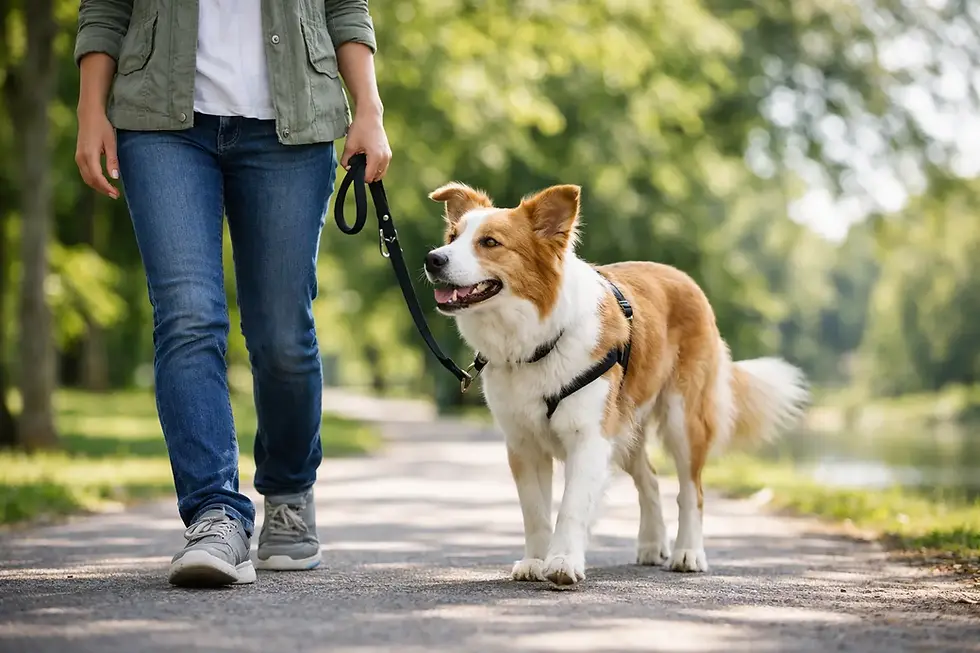
The trail layer may start in clear view, move a short distance away and wait with a high-value reward. Your dog is fitted with a comfortable harness and attached to a suitable long line. Once they have investigated the scent article, they are given a consistent start cue and allowed to move forward.
Your job is to follow safely, keep gentle line contact and let the dog work. Avoid pulling them towards the answer or repeatedly calling their name. If they check back with you, offer calm reassurance, then allow them to return to the task. The reward comes when they locate the trail layer.
As the dog gains experience, trails can become longer and include turns, changes of surface, aged scent and more environmental distraction. Progress should be based on the dog’s confidence, not the owner’s eagerness to make it harder.
The equipment is straightforward
You do not need a cupboard full of specialist kit. A well-fitted Y-shaped harness, a long line and rewards your dog genuinely values are enough to begin. Avoid attaching the trailing line to a collar. Your dog needs freedom to work with their head and body, and harnessing is kinder on their neck when they move with purpose.
A long line should be handled properly, not wrapped around your hand or allowed to drag into hazards. Good instruction matters here. The activity is enjoyable, but it still takes place in real environments where awareness of people, traffic, wildlife and ground conditions is essential.
Mantrailing versus tracking: what is the difference?
People often use the terms interchangeably, but they are not quite the same. Tracking generally focuses on a dog following ground disturbance and scent left directly in a person’s footsteps. It is often slower and more methodical, with the dog working close to the ground.
Mantrailing focuses on locating and following an individual person’s scent. The dog may work with their nose down, lift their head to catch airborne scent, move across different surfaces or briefly cast around to solve a problem. There is no single correct body position because scent does not behave in a neat line.
For pet owners, the practical difference is less important than choosing a well-run activity that suits the dog in front of you. Both can be rewarding. Mantrailing often appeals because it feels like a clear search with a satisfying finish.
How to get the best from mantrailing
The biggest mistake is treating mantrailing as a competition. A dog that completes a difficult trail while stressed, over-aroused or confused has not had a better session than a dog that confidently completes a short one.
Keep expectations realistic. Weather, wind, rain, temperature, traffic and the age of the trail can all change the difficulty. A trail that was easy last week may be challenging today. Let the dog gather information and resist the urge to decide they are wrong simply because they pause or change direction.
Consistency also matters. Give the same clear start routine, use a harness that means work is beginning and finish with a reward your dog values. These details help the dog understand when it is time to search and when it is time to return to normal walking behaviour.
Mantrailing should support your dog’s overall training, not become an excuse for poor handling elsewhere. If your dog pulls on every walk, practise loose-lead skills separately. If recall is unreliable, use a long line and train recall in suitable settings. Clear rules and enjoyable outlets are not opposites - they work best together.
Finding the right setting for your dog
For owners around Crawley, Horsham, Horley and the wider West Sussex area, varied locations can make mantrailing especially useful. Quiet green spaces are often ideal for beginners, while more experienced dogs may progress to carefully selected urban environments with different surfaces and scent challenges.
Choose training that keeps groups manageable, gives dogs enough space and adapts the trail to the individual dog. A good instructor will not simply send every dog down the same route. They will consider confidence, motivation, handling ability and the distractions present on the day.
The best result is not a dramatic story about how far your dog trailed. It is seeing them work with purpose, then return home content, settled and a little more confident. Give your dog a job they can succeed at, and you may find that everyday life starts to feel calmer for both of you.

Comments