
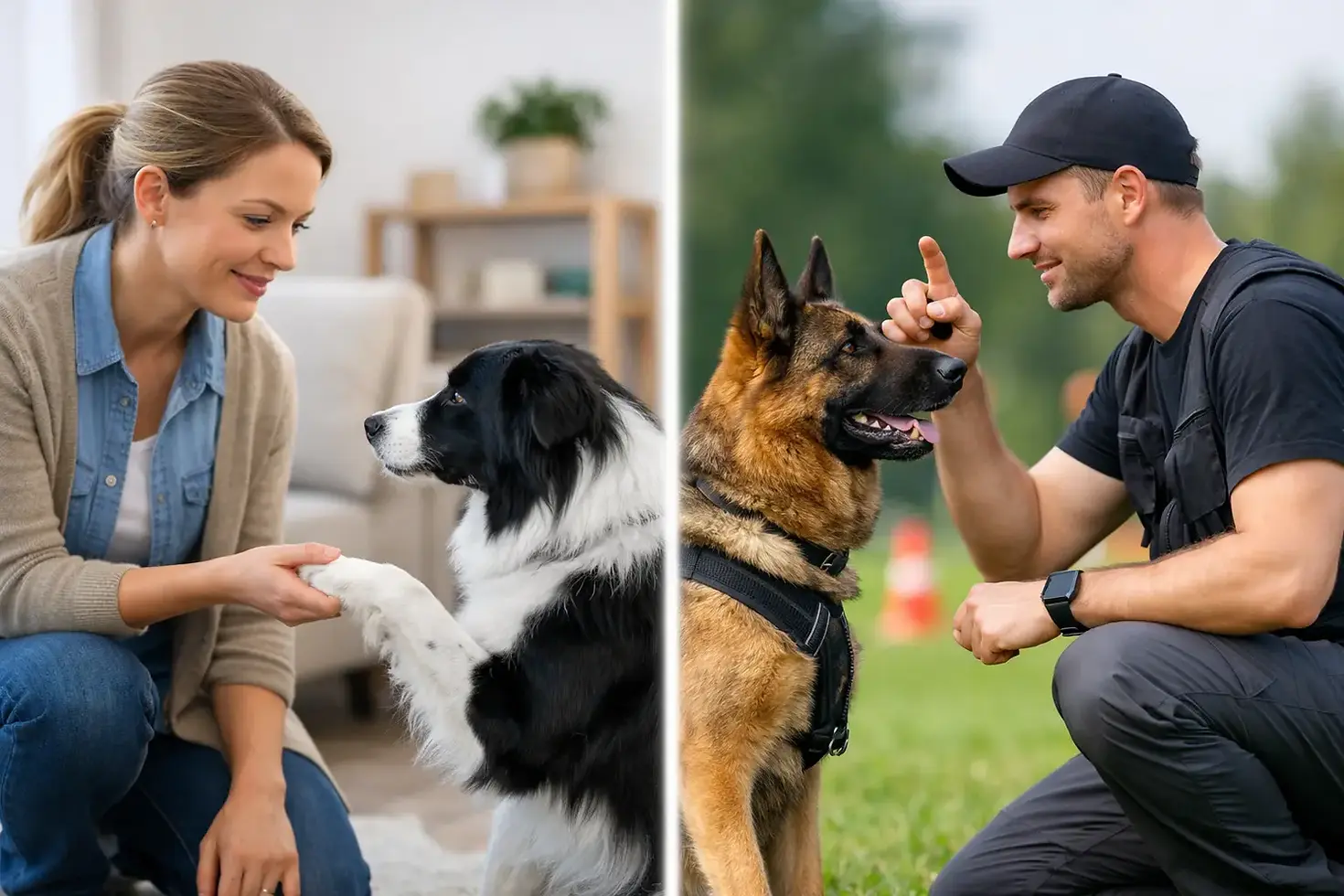
Dog Behaviourist Versus Trainer: Which Helps?
- 6 days ago
- 5 min read
A dog who drags you towards every passing dog, ignores recall at the park or explodes when the doorbell goes off does not need a label - they need the right help. The question of dog behaviourist versus trainer matters because the professional you choose should match the problem in front of you, your dog's welfare needs and the life you want to lead together.
For most family owners, the goal is not a dog that performs perfectly in a lesson. It is calm, reliable behaviour on the pavement, in the park, around visitors and when real-life distractions appear. Knowing the difference helps you invest your time and money where it will make the biggest difference.
What does a dog trainer do?
A dog trainer teaches skills and helps owners build clear routines. That may mean recall, loose-lead walking, settling on a mat, staying calm around other dogs, coming away from distractions or responding promptly to everyday cues.
Good training is not simply about teaching a dog to sit for a treat. It is about showing the owner how to communicate clearly, reward the right choices, set fair boundaries and follow through consistently. The skill is then practised in the places where it matters: at home, on local walks, near traffic, around people and in more distracting environments.
This is especially useful for puppies and adolescent dogs. A young dog may not be frightened or aggressive; they may simply be overexcited, under-trained and accustomed to rehearsing the wrong behaviour. Jumping up, pulling, selective hearing and frantic greetings are often training and management issues. With a structured plan, these habits can be changed.
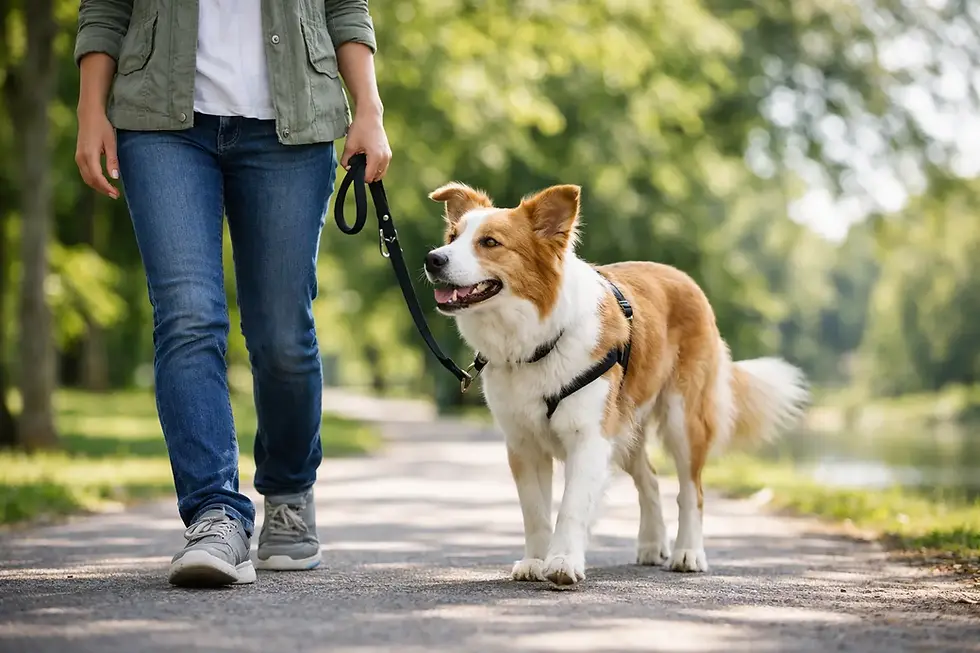
Training is also appropriate for many adult dogs who need better obedience, more focus or a stronger relationship with their owner. The aim is practical freedom. A dog that can walk without towing you down the road, return when called and remain neutral around the world is safer and easier to enjoy.
What does a dog behaviourist do?
A behaviourist focuses on the reasons behind behaviour, particularly where fear, anxiety, frustration, distress or aggression may be involved. Their work tends to be more in-depth because behaviour is rarely caused by one thing.
For example, a dog that barks and lunges at other dogs may look 'aggressive' from a distance. But the behaviour could be driven by fear, lead frustration, pain, a lack of social confidence, repeated bad experiences or a mixture of factors. A behaviourist assesses the dog's history, environment, triggers, body language and emotional state before putting a plan in place.
Cases that may warrant behavioural support include serious guarding around food or possessions, bites or near-bites, separation-related distress, severe phobias, persistent panic, compulsive behaviour and conflict within a multi-dog household. Where pain or a medical issue could be contributing, a vet should be involved first. No training plan can fairly address behaviour that is being made worse by discomfort.
The title 'behaviourist' is not protected in the UK, so it is worth looking beyond the wording on a website. Ask about qualifications, experience with similar cases, approach, assessment process and whether the professional works alongside veterinary support when needed.
Dog behaviourist versus trainer: the real difference
The difference is not as neat as people are often led to believe. Many experienced trainers work with behaviour challenges, and some behaviourists include training within their plans. What matters is the depth and risk level of the issue, as well as the professional's competence.
A trainer is often the right starting point when your dog needs clearer expectations and better skills. Perhaps your spaniel loses their head around squirrels, your teenager pulls towards every dog, or your puppy cannot settle when visitors arrive. These are common real-world issues, and they improve when owners receive practical coaching and stick to a consistent plan.
A behaviourist may be the better fit when the dog is experiencing significant emotional distress, when there is a bite history, or when behaviour has suddenly changed without an obvious explanation. These situations need careful assessment rather than a quick fix or generic class programme.
There is also a middle ground. A reactive dog may need both behavioural understanding and hands-on training. Reducing the dog's emotional pressure matters, but so does teaching the owner how to create distance, use the lead effectively, interrupt fixation, reward calm choices and build reliable responses over time.
Do not choose based on the job title alone
A confident website claim is not evidence of good practice. Whether you choose a trainer or behaviourist, look for someone who takes the time to understand your dog and who can explain their plan in plain English.
Be cautious of anyone promising to fix serious behaviour in one session, or anyone who suggests your dog needs only treats regardless of what happens in the real world. Equally, avoid approaches built around intimidation, flooding a frightened dog with triggers or punishing behaviour without addressing why it is happening.
Dogs need both support and structure. Rewarding the behaviour you want is essential, but so are clear rules, sensible management and consistent consequences. A dog should not have to guess whether pulling, jumping up or ignoring recall will work today because the answer changes tomorrow.
The best professional will coach you as much as they coach your dog. Your dog lives with you, not with the trainer. If you leave a session feeling confused, unable to practise or dependent on the professional to handle every situation, the plan is unlikely to hold up.
Questions to ask before booking
Before committing to sessions, ask how the professional assesses a new dog and whether they have worked with your specific concern. Find out where training takes place, because a dog who listens indoors may need a different plan outside.
Ask what support you will receive between sessions and what progress should realistically look like. Behaviour change is not always linear. You may see strong improvement, then have a difficult walk or a setback after a stressful event. That does not mean the work has failed, but it does mean the plan should be realistic and adaptable.
It is also reasonable to ask about methods. A balanced approach should not mean harshness. It should mean using motivation, clear communication, appropriate boundaries and fair guidance to build confidence and dependable behaviour. Your dog needs to understand what earns reward, what is expected and how to succeed when life gets busy.
When group classes, private training and behaviour support fit
Group classes can be excellent for dogs who need social neutrality, focus around distractions and regular practice. They are not always suitable for a dog already overwhelmed by other dogs or people. In that case, private training may provide the space and individual coaching needed before joining a group setting.
One-to-one support is particularly useful when the challenge happens on your usual walk, at your front door or in your home. The trainer can see the full picture and help you make changes that actually fit your routine. For owners in Crawley, Horsham and Horley, real-life training in familiar environments can be far more valuable than practising only in a quiet hall.
For higher-risk cases, behavioural support may need to come first. Management is not a failure in these situations. Using distance, barriers, a lead, a muzzle where appropriately introduced, or avoiding known triggers can prevent further incidents while you work through a proper plan.
The outcome you should expect
The right help should make daily life clearer and calmer. You should understand what to practise, why it matters and how to handle the moments that used to leave you stressed. Your dog should become more responsive, more confident and better able to cope with ordinary distractions.
At Off-Leash Obedience, the focus is on building that reliability beyond the training session - because a recall only matters when there is something tempting to chase, and loose-lead walking only counts when you are late, tired and heading past another dog.
Start with an honest view of the behaviour, not the label. Choose the person who can assess your dog properly, give you a clear route forward and help you put calm, consistent handling into practice every day.


Comments