
How to Build Dog Neutrality for Calmer Walks
- Aug 2
- 6 min read
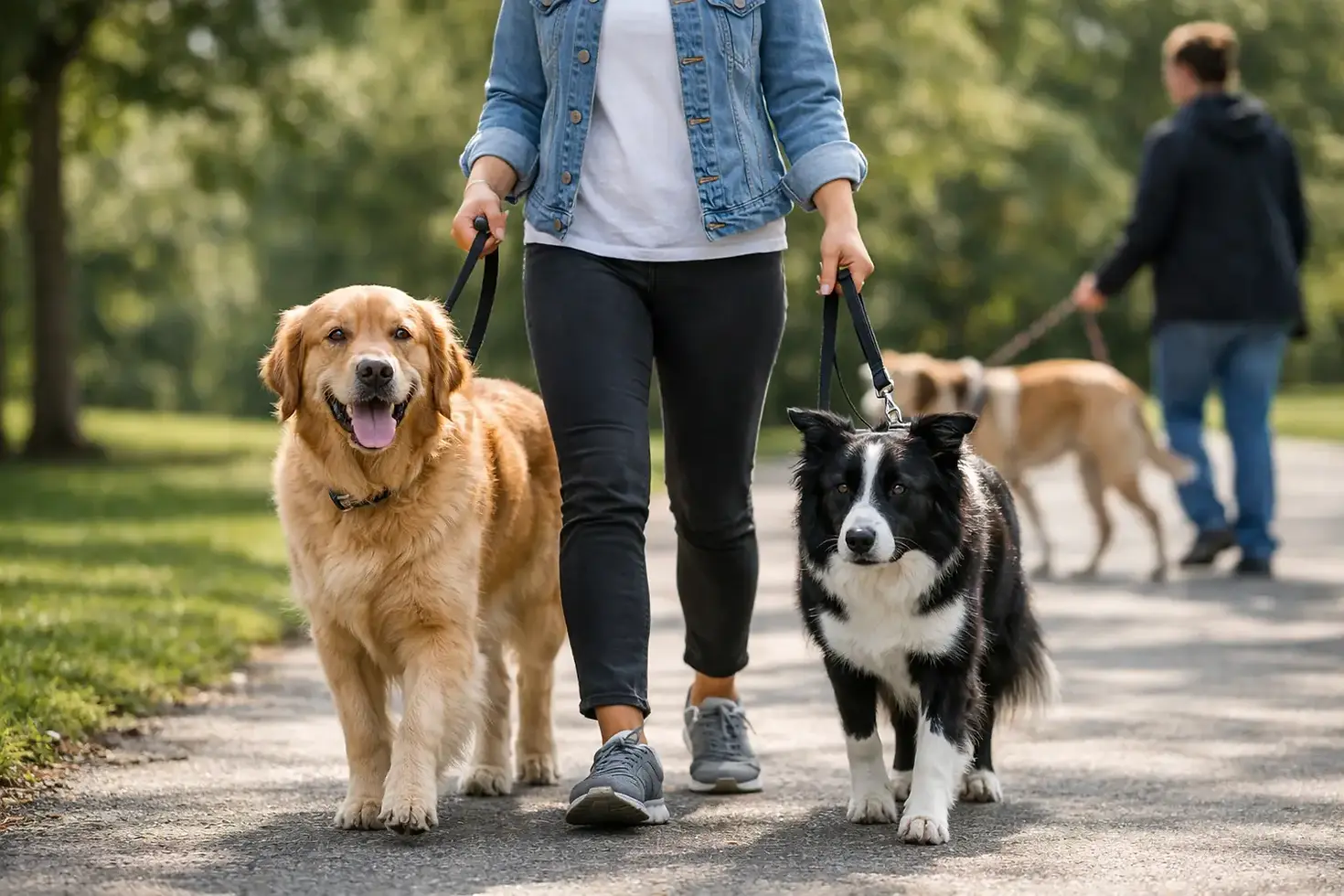
A dog does not need to greet every dog it sees to be friendly. In fact, one of the most useful skills you can teach is how to build dog neutrality: the ability to notice another dog, remain calm and stay connected to you rather than pulling, staring, barking or trying to rush over.
For many owners, walks become stressful because every dog in the distance feels like an event. Your dog may become wildly excited, anxious, frustrated or reactive. The answer is not to avoid all dogs forever, nor is it to force greetings in the hope they will ‘get used to it’. The aim is calm, reliable behaviour in real life.
What dog neutrality actually looks like
A neutral dog can see, hear or pass another dog without feeling compelled to interact. They may look briefly, then look away. They can continue walking on a loose lead, respond to their name and follow a simple cue even when another dog is nearby.
Neutrality is not the same as ignoring the world completely. Dogs are allowed to notice other dogs. The difference is that they do not lose control of themselves when they do.
This matters whether your dog is over-friendly or worried. The dog that drags you across a pavement to say hello can be just as difficult to manage as the dog that barks and lunges. Both are struggling with emotional control around a distraction. Building neutrality gives your dog a clearer job: stay with their handler unless invited otherwise.
Start with engagement before adding dogs
You cannot expect your dog to choose you around distractions if they have never learned that paying attention to you is worthwhile. Start in places where your dog can succeed, such as the garden, a quiet green space or a calm part of your usual route.
Practise simple, useful behaviours: responding to their name, turning with you, walking beside you for a few steps, hand targets, recall and settling on a loose lead. Reward the right choices with food, praise, access to sniffing or movement forward. Different dogs value different rewards, and food is often helpful during early learning, but it should not be the only reason your dog listens.
Use clear cues and follow through calmly. If you ask your dog to turn with you, do not repeat the cue five times while they continue pulling. Create the movement, help them make the right choice, then reward it. This is where fair, consistent boundaries support the training. Your dog learns that calm behaviour works, while pulling towards distractions does not get them where they want to go.
How to build dog neutrality at the right distance
Distance is your most valuable training tool. If your dog is already staring, whining, barking, lunging or refusing food, they are too close to learn effectively. Moving nearer at that point rarely builds confidence. It usually rehearses the behaviour you are trying to change.
Begin far enough away that your dog can notice another dog and still respond to you. For some dogs, this may be the other side of a field. For others, it may be across a quiet road. There is no prize for starting close.
The moment your dog spots another dog, calmly acknowledge it. You might say their name, ask for a turn, or simply reward them for looking back at you. Then move on before they become fixated. The message is straightforward: other dogs appear, you stay composed, and good things happen through your handler.
At first, keep these sessions short. Two or three successful observations are more useful than a twenty-minute walk spent managing an overwhelmed dog. Over time, reduce the distance gradually, but only when your dog remains loose, responsive and able to recover quickly.
Read the early signs of pressure
Owners often wait until a dog barks before changing direction. By then, the dog has usually been telling you for several seconds that they are struggling. Watch for a closed mouth, hard staring, a raised head, body tension, slowing down, leaning into the lead or suddenly refusing a treat they would normally take.
These signs do not mean your dog is being stubborn. They tell you the situation is becoming too difficult. Increase distance early, use a calm U-turn and give your dog a chance to reset. Good handling prevents problems rather than trying to correct an explosion after it has happened.
Stop making every dog encounter a greeting
Repeated on-lead greetings are one of the quickest ways to create an over-excited dog. If your dog learns that every dog equals play, sniffing or attention, they will naturally start scanning the environment and pulling towards every opportunity.
Social dogs still need boundaries. Choose greetings carefully rather than allowing them by default. A greeting should be brief, relaxed and between dogs that are both comfortable. If either dog is stiff, overly intense, pinned by the lead or unable to disengage, walk away.
For many dogs, a period with no on-lead greetings is helpful while you rebuild calm habits. This is not punishment or isolation. Your dog can still have appropriate social time with known, compatible dogs in safe settings. You are simply separating social play from everyday walking.
Use movement to your advantage
Standing face-to-face on a narrow path can make dogs feel trapped, especially when both are on leads. Movement is often easier. Cross the road, make a wide arc, step into a driveway, or turn and walk away before the other dog passes.
Do not worry that changing direction means you have failed. It is a sensible training choice. Each calm exit teaches your dog that they do not need to confront, greet or react to every dog they see.
When you do need to pass closer, keep your lead short enough for safety but not tight. Constant tension can add pressure and make your dog feel restricted. Keep your own body calm, give your dog a clear side to walk on and move with purpose. A nervous, hesitant handler often tells the dog there is something to worry about.
Build a reliable default behaviour
Neutrality becomes much easier when your dog has an automatic behaviour to fall back on. For one dog, that may be walking close to your side. For another, it may be looking at you, moving behind your legs or stepping onto the grass while another dog passes.
Choose one simple pattern and practise it when no dogs are around. For example, say your dog’s name, turn 180 degrees and reward them for coming with you. Or teach them that the cue ‘this way’ always means move with you promptly. Once the behaviour is strong in easy environments, use it around mild distractions.
Avoid relying on constant chatter. Repeating ‘leave it’ while your dog stares at another dog does not teach much if they have no idea what they should do instead. Give them a clear alternative, reward it, and practise until it becomes familiar.
Be honest about your dog’s needs
Some dogs need more space than others. A young adolescent may need time to grow out of frantic social excitement. A fearful rescue dog may need a slower programme built around confidence and predictability. A dog with a history of biting, redirecting onto the lead or serious aggression needs professional support and a careful safety plan.
There is no benefit in comparing your dog to the Labrador calmly sitting outside a café. Your job is to work with the dog in front of you and make steady progress. In busy areas around Crawley, Horsham or Horley, this may mean choosing quieter times, wider routes and locations where you can create distance while training is still new.
Consistency turns practice into real-life results
Dog neutrality is built through hundreds of small decisions. Every time you calmly create space, reward a check-in or prevent an unwanted greeting, you are showing your dog how walks work. Every time pulling gets them to another dog, you are teaching the opposite.
This does not mean your walks must feel like military drills. Dogs need time to sniff, explore and enjoy themselves. Structure and freedom work well together when the rules are clear: loose lead earns access, calm choices earn more freedom, and your dog learns that you are worth listening to even when life is busy.
The goal is not a dog that never sees another dog. It is a dog that can see one, take a breath and carry on with you. That calm moment is where safer walks, better recall and genuine freedom begin.


Comments