

Dog Behaviour Support for Calmer Everyday Life
- 1 day ago
- 5 min read
A walk should not begin with a battle at the front door. Nor should visitors, other dogs or a passing squirrel leave you bracing for the next reaction. Good dog behaviour support is not about making a dog look obedient for ten minutes in a quiet hall. It is about building calm, reliable choices when real life is happening around you.
That means looking beyond the headline problem. Pulling, barking, lunging, jumping up and selective recall are rarely solved by one command or a pocket full of treats. They improve when the dog understands what is expected, the owner can give clear guidance, and practice happens consistently in the places where the behaviour matters.
What dog behaviour support should actually do
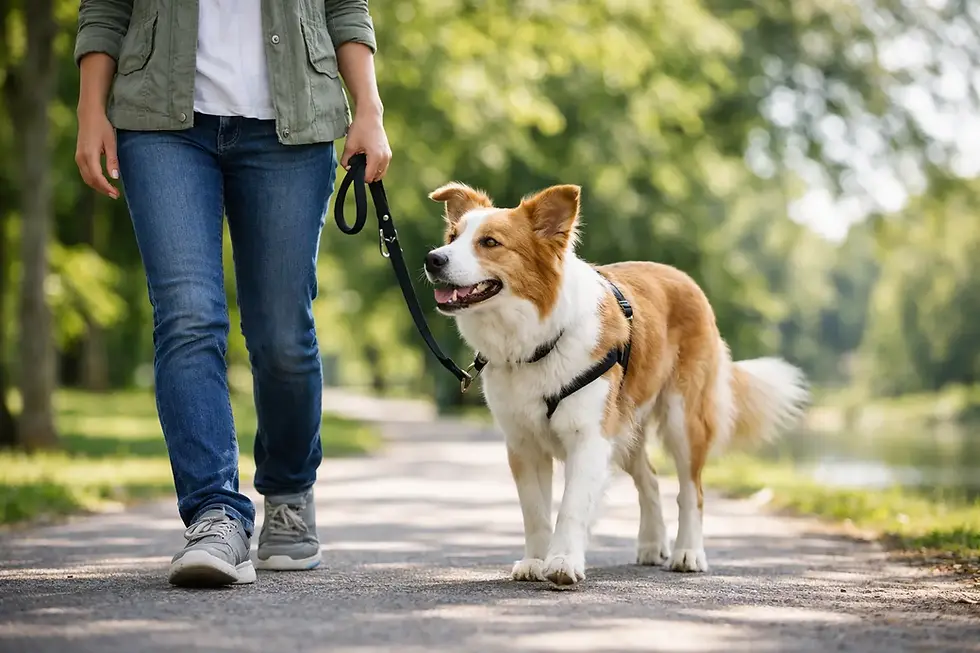
Effective support starts by making everyday life more manageable. Your dog should learn to settle at home, walk with a loose lead, return when called, and stay connected to you around distractions. These skills create more freedom, not less. A dog that can cope calmly in public has access to better walks, safer choices and a more relaxed life with the family.
There is no benefit in labelling a dog as stubborn, naughty or dominant and leaving it there. Behaviour is information. A dog pulling towards another dog may be overexcited, frustrated, worried or simply practised at getting where it wants by leaning into the lead. The outward behaviour can look similar, but the right plan depends on what is driving it.
This is why a proper assessment matters. It considers your dog's age, health, breed traits, daily routine, previous learning and the situations that trigger the issue. An adolescent dog with no impulse control needs a different approach from an adult dog whose reactivity began after a frightening encounter.
Start with the behaviour that affects life most
Owners often arrive with a long list: poor recall, barking at the window, pulling on lead, jumping at guests and ignoring cues outdoors. Trying to fix everything at once usually creates frustration for both dog and owner. Begin with the behaviour that has the greatest impact on safety and daily stress.
For many families, that is lead walking. If every walk starts with dragging, tension builds before you have even reached the park. For others, it is recall. A dog who disappears after wildlife, runs to unfamiliar dogs or ignores calls near a road cannot safely enjoy off-lead freedom yet.
Choose one priority, then identify the smaller skills beneath it. Reliable recall, for example, is built through attention, a positive response to the cue, sensible use of a long line and gradual exposure to distractions. It is not created by repeatedly calling a dog who has already decided that the hedge, another dog or a scent trail is more rewarding.
Clear boundaries and rewards work together
A balanced approach does not mean being harsh, nor does it mean hoping food alone will solve every problem. Rewards are valuable. They help a dog understand the right choice and make training enjoyable. But everyday reliability also requires boundaries that are fair, consistent and understood.
If pulling gets your dog to the interesting smell, greeting or open field, pulling has been rewarded - even if you are frustrated while it happens. If jumping up earns attention from visitors on some occasions, the behaviour remains worth trying. Your dog needs a clear pattern: calm behaviour moves life forward; unwanted behaviour does not.
That requires good timing from the owner. Reward the loose lead before it tightens. Praise the check-in before your dog becomes fixated. Guide your dog away from a situation it cannot handle rather than waiting for an explosion and then repeating a cue that has lost meaning.
Consistency does not mean every walk must be rigid. Dogs need time to sniff, explore and enjoy being dogs. The aim is to make those freedoms available through calm behaviour, not to remove them. A dog can have a relaxed sniff on a loose lead and still understand that dragging you there is not an option.
Practise where the problem happens
A dog may sit beautifully in the kitchen and still lose focus near bicycles, children or other dogs. That is not proof that training has failed. It shows that the environment is currently too difficult. Distractions change the picture, and your training needs to reflect that.
Build skills in stages. Start at a level where your dog can succeed, then gradually add distance, movement, noise and temptation. A dog learning neutrality around other dogs might first work far enough away to remain calm. As confidence grows, the distance can reduce. Rushing straight into a busy park often rehearses the very reaction you want to change.
Real-world dog behaviour support should include the routes, parks and public spaces you use. For owners in Crawley, Horsham and Horley, that may mean working around busy pavements, school-run traffic, shared footpaths and the distractions of local green spaces. The setting is part of the training, not an afterthought.
Stop rehearsing the behaviour you do not want
Every repetition strengthens a habit. If your dog practises charging to the window, pulling to every dog, or ignoring recall at the end of a long line, that behaviour becomes more established. Management is not a shortcut or a failure. It gives you the space to teach a better response.
Use sensible set-ups while training is underway. Close access to a window if your dog patrols and barks at every passer-by. Use a long line in open spaces until recall is proven around distractions. Ask visitors to ignore jumping rather than accidentally rewarding it. These changes are temporary support, but they prevent daily setbacks.
Management should sit alongside training, not replace it. The long-term goal is not to avoid every trigger forever. It is to give your dog the skills and confidence to cope appropriately when life is unpredictable.
Know when the issue needs more than basic training
Some behaviour concerns need prompt, specialist attention. A sudden change in temperament, reluctance to be handled, unexplained aggression, disrupted sleep or a drop in tolerance can have a medical cause. Speak to your vet before assuming it is purely a training issue, particularly if the change is recent or out of character.
Safety comes first where there is a history of biting, serious aggression or risk to people or other animals. Avoid putting your dog into situations that force a confrontation. Get professional guidance and use practical safety measures while a tailored plan is put in place.
It also helps to be realistic about progress. A dog that has spent two years reacting on walks will not become neutral after one session. Early wins may look small: a brief check-in, a calmer pass at distance, or a quicker recovery after a trigger. Those small wins matter because they show your dog is learning a different pattern.
The owner's role is where results last
Training sessions can show you what is possible. Your daily habits make it reliable. Dogs learn from the moments between formal exercises: how they leave the house, what happens at the kerb, whether pulling works, and how you respond when they become excited.
Keep your plan simple enough to follow on a wet Tuesday when you are short on time. Use the same cues. Be clear about the household rules. Make sure everyone handling the dog understands what calm behaviour looks like and how to reinforce it. Mixed messages are confusing, especially for young or excitable dogs.
At Off-Leash Obedience, the focus is on coaching the owner as well as training the dog, because confidence at the end of the lead changes everything. You do not need to be perfect. You need a clear plan, good practice and the willingness to stay consistent when progress is gradual.
Your dog does not need a life with no distractions, no excitement or no boundaries. They need to know that you can guide them through those moments. Start with one behaviour, practise it where it counts, and let each calmer choice become the foundation for the next.


Comments